Connecting the EDGE
10 - 11 May 2017 | Berlin, Germany

Speakers
close



Presentation Title
Masterclass Title
Graphene-Gate Transistor For High-Sensitivity Gas Sensing
Berlin, Germany
Track 2 - Room 2
12:20 - 12:40
Presentation Summary
A graphene-gate transistor, where graphene is used as a gate of a Si transistor, has been developed and used as a gas sensor. When gas molecules adsorb on the graphene, the work function of graphene changes, thus changing the threshold of the transistor. This novel sensor succeeded in detecting 0.7 ppb of NO2 in N2.
Speaker Biography
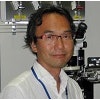
Shintaro Sato received his Ph.D. from the Department of Mechanical Engineering, University of Minnesota, in 2001. In the same year, he joined Fujitsu Limited. He became a staff researcher in 2002 and a senior researcher of Fujitsu Laboratories Ltd. in 2007. He also worked for Semiconductor Leading Edge Technologies, Inc., between 2006 and 2010. From June 2010 to March 2014, he worked for the National Institute of Advanced Industrial Science and Technology. He is currently a research manager of Fujitsu Laboratories Ltd. His main research area includes synthesis and evaluation of nanocarbon materials and their applications to electronics.
Company Profile
Fujitsu Laboratories conducts path-breaking R&D on a broad range of technologies that is helping to make ubiquitous networking a reality. From innovative IT services to computers, networks and other platforms, to cutting-edge electronic devices, we are creating the technologies of the future, and making them work together in bold new ways. As the central pillar of the Fujitsu Group's R&D organization, we make essential contributions to the IT solutions offered by Fujitsu to customers worldwide, while also achieving landmark advances in scientific research. Leveraging our global resources and continually challenging the frontiers of technology, we will play a key role in ushering in the ubiquitous networking world and create customer value through IT solutions-demonstrating our continuing commitment to Fujitsu's longstanding mission: "What mankind can dream, technology can achieve."
More Speakers
This conference is co-located with other relevant conferences at the IDTechEx Show! Your conference pass allows you to access any conference sessions.






















































![Google [X]](http://idtxs3.imgix.net/si/10000/F8/A1.png?w=130&h=78&fit=fill&bg=ffffff&border=0)