Will IME Be the Path for Printed Electronics to Break into Automotives
Avr 14, 2026
Lily-Rose Schuett

With in-mold electronics (IME) company, Kronos Mechatronics, having won the LOPEC 2026 Startup Award for Best Business Potential, the hype for printed electronic technologies can continue to flourish. In automotive applications, IME can combine smart aesthetics with functionality, while reducing the cost and weight associated with traditional wiring.
IDTechEx recently attended LOPEC 2026 in Munich and spoke with multiple printed electronics and IME companies operating within different sectors, including automotives. Their report, "In-Mold Electronics 2025-2035: Forecasts, Technologies, Markets", also covers some of the latest developments happening within the industry.
Advantages of IME within the automotive space
Increased demand for sensing, lighting, and heating systems within vehicles is creating a space within the market for IME to enter, with low profile options becoming necessary to reduce weight by eradicating the need for housing whole wiring networks behind the dashboard.
IME can allow for conductive traces (replacing wires) to be run within surfaces, rather than taking up space behind them, to make components lighter and vehicles more comfortable. The capacity for IME to create a variety of 3D structures is what sets the technology apart from regular 2D-surface printed circuit boards.
Exhibiting companies at LOPEC 2026
Numerous IME companies are starting to enter the automotive space, with many showcasing their technologies at LOPEC 2026 in Munich. Kronos Mechatronics, MackSmaTec, Tactotek and KAIXIN AC are a few of the companies offering IME solutions for automotive applications, such as enhancing interiors and upgrading aesthetics with the integration of heating elements or colored lighting. The use of IME rather than 2D electronics allows for more complex structures and curved surfaces to be fitted with electronics, so their presence can be more versatile and met with a wider scope of design choice not restricted by practicality.
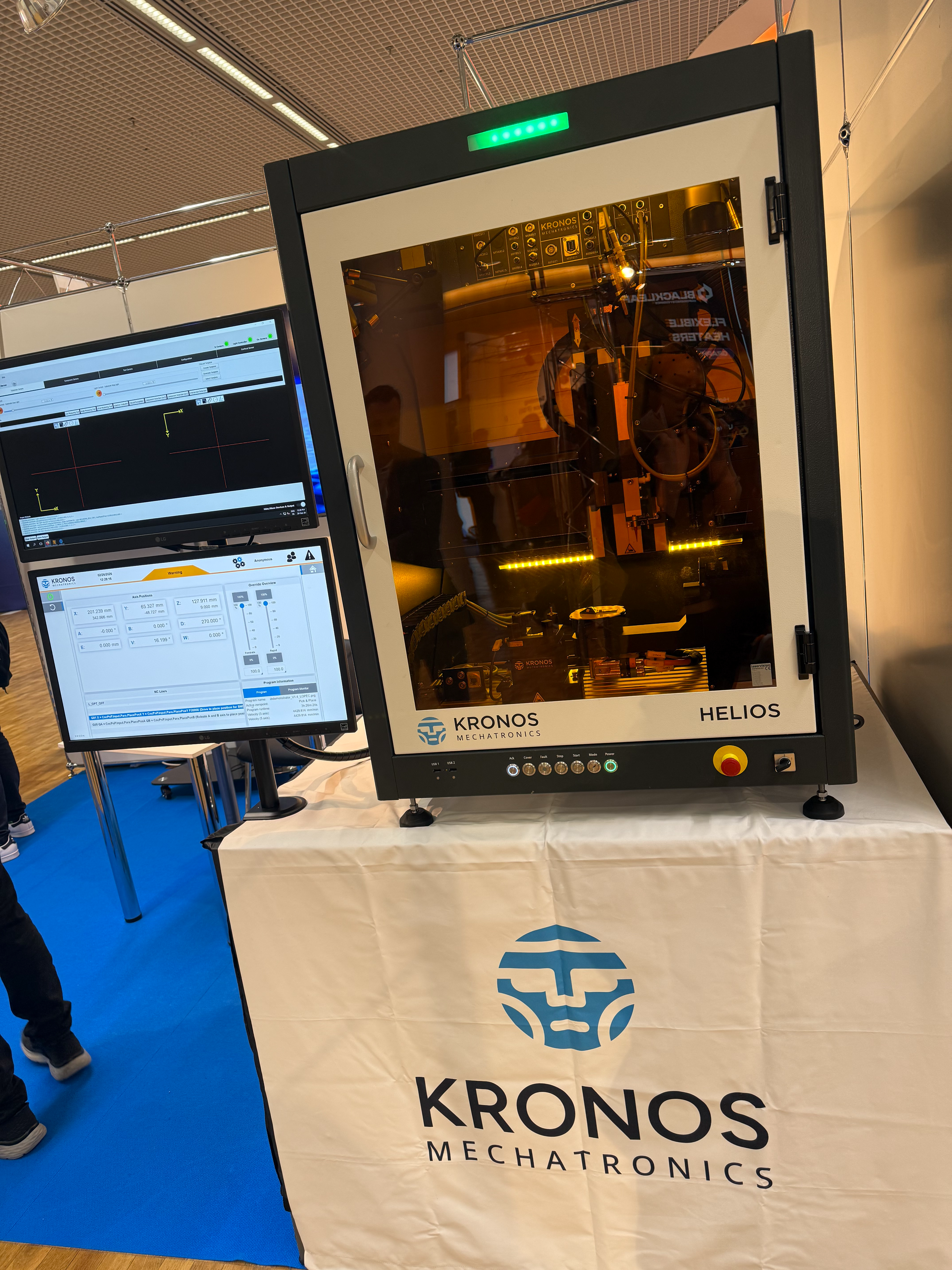
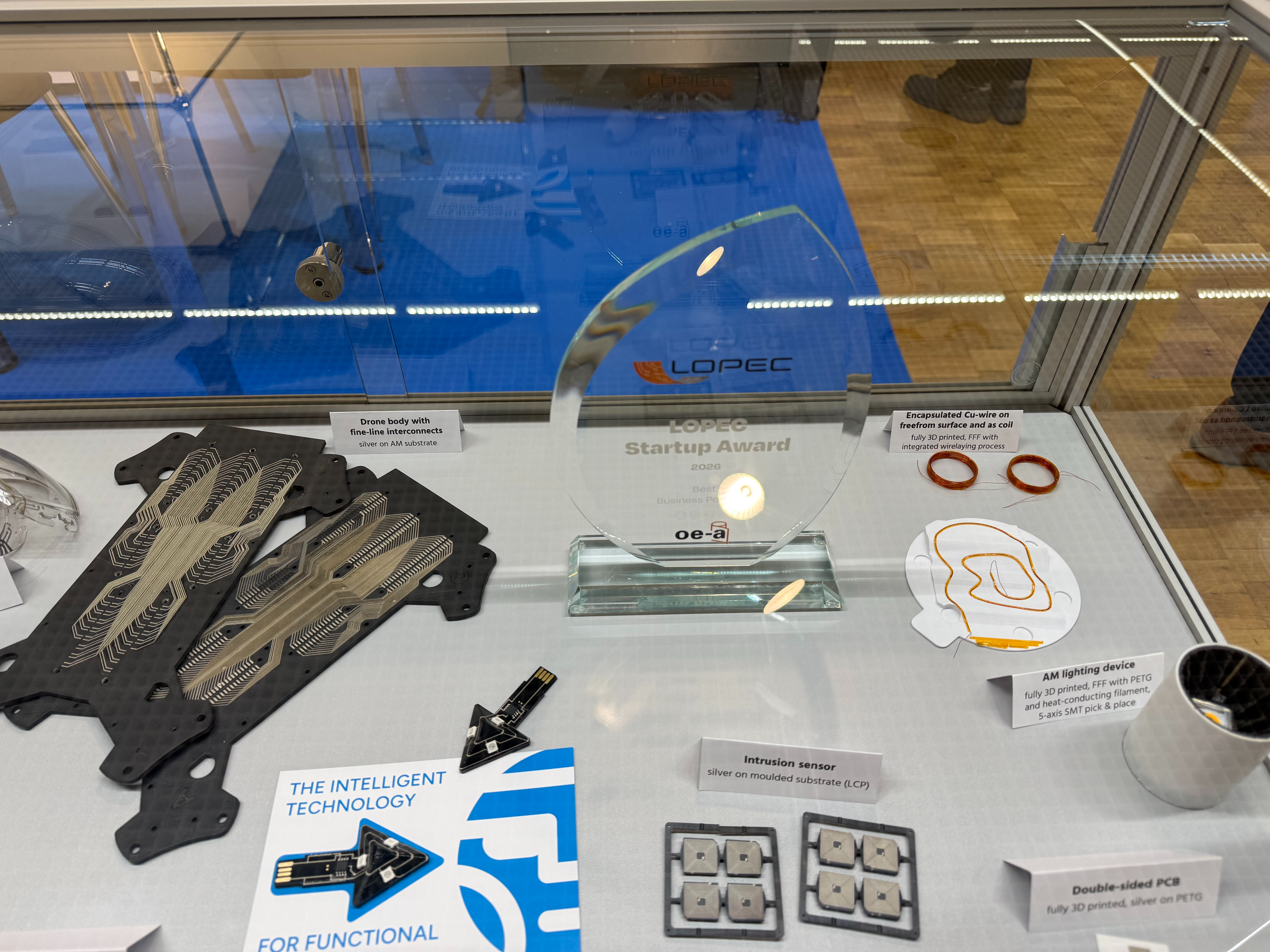
Kronos Mechatronics at LOPEC 2026. Source: IDTechEx.
Heating and lighting with IME
Heat technologies in particular are necessary for electric vehicles, as they lack the heat otherwise produced by internal combustion engines. MackSmaTec demonstrated the integration of wiring around radars within cars to keep them working at an optimal temperature and to allow for defrosting. Conductive inks company, Henkel, showcased heat mat technology to keep EV batteries warm, made with 2D printed electronics.
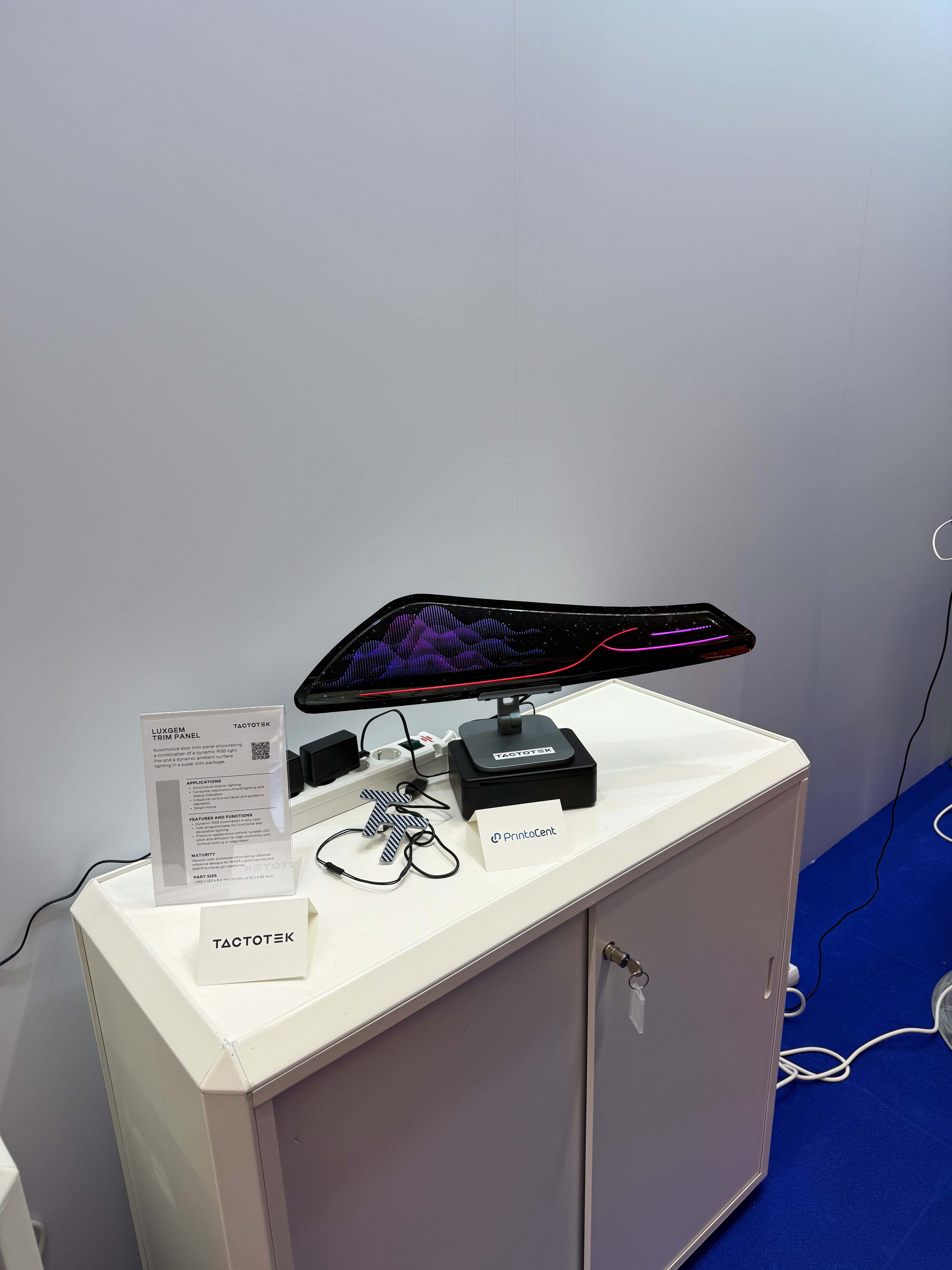
MackSmaTec at LOPEC 2026. Source: IDTechEx.
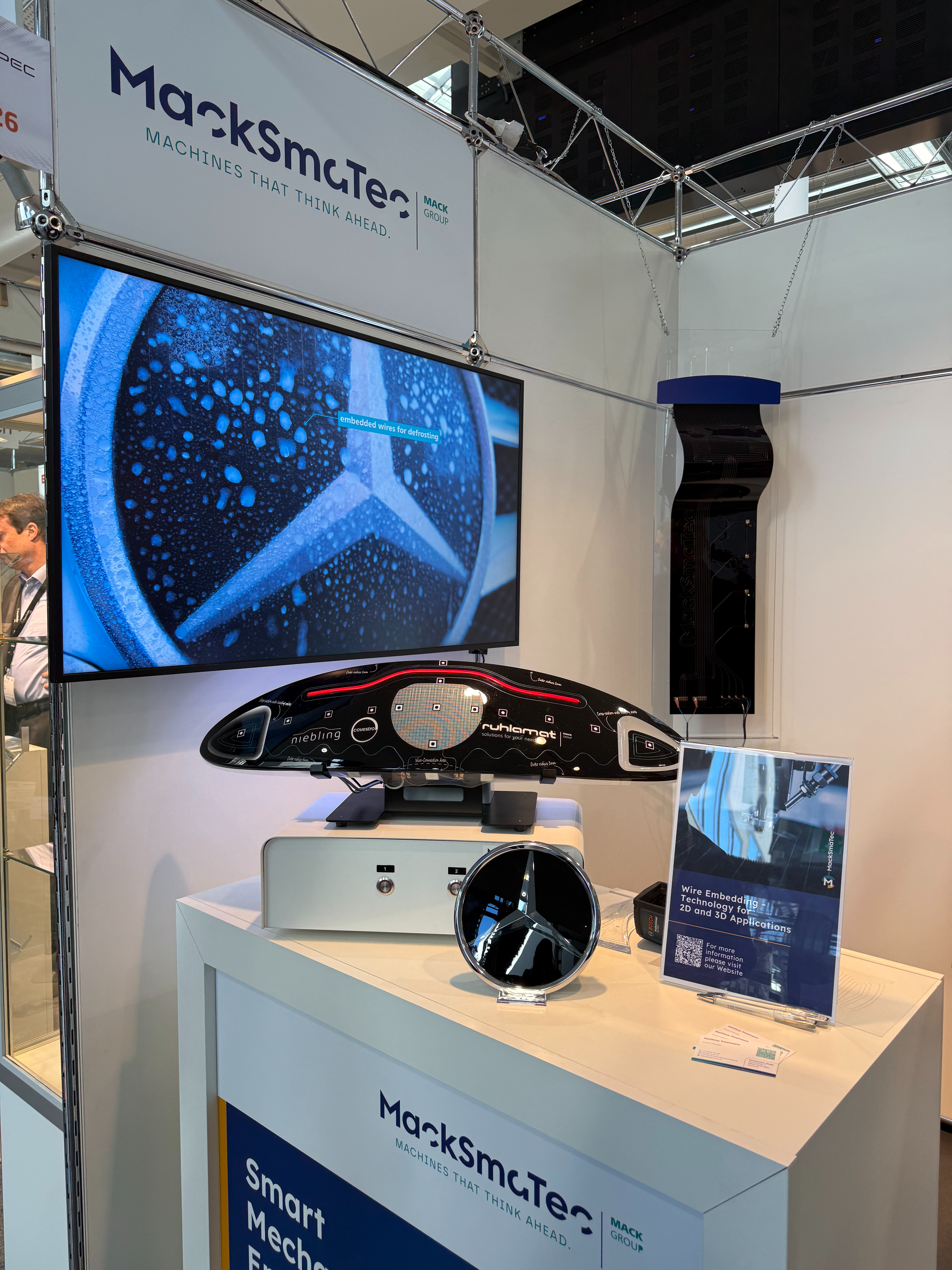
Tactotek at LOPEC 2026. Source: IDTechEx.
Colored lighting is increasingly desired within newer vehicle models to enhance design features and create a more modern look and feel. This is shown to be particularly common in the form of strip lighting in doors, multicolored dashboard lights, and lights underneath vehicle badges. Tactotek exhibited their adoption of IME technologies to integrate lighting features for these applications, presenting a variety of models at the exhibit to showcase versatility.
IME is currently being assessed for a number of automotive applications, and if successful, these may see adoption from around 2027 to 2028.
For more information, visit IDTechEx's portfolio of Printed & Flexible Electronics Research Reports and Subscriptions for research into 2D and 3D electronics, and the "In-Mold Electronics 2025-2035: Forecasts, Technologies, Markets" for the latest IME developments.