
10 Apr 2026
Biofuels and E-Fuels Video: Production Pathways and Outlook
IDTechEx analyst Eve Pope discusses the production pathways for biofuels and e-fuels including sustainable aviation fuel and renewable diesel.
04 Mar 2026
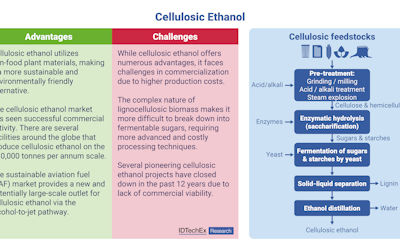
e-Fuels Explained: Methanol, Methane, Diesel, and SAF
Reaching global net-zero by 2050 targets in the marine and aviation sectors will require large-scale e-fuel production. This IDTechEx article provides an explanation of the current e-fuel space.
04 Feb 2026
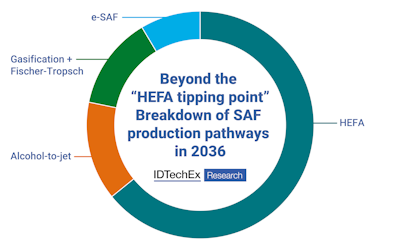
Beyond the HEFA Tipping Point: What Does the Future Hold for Biofuels?
While the HEFA pathway dominates sustainable fuel production globally, feedstocks are limited. In this article, IDTechEx explores advanced biofuel technologies expected to rise when the world runs out of HEFA.
14 Jan 2026
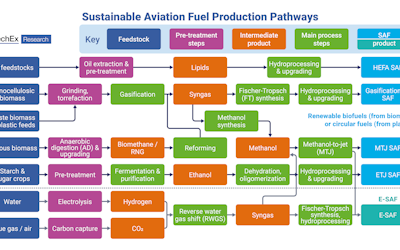
SAF (Sustainable Aviation Fuel) Market to Reach US$50 billion in 2036
Decarbonization of the aviation and maritime sectors will require large amounts of low-carbon fuels to reach global net-zero targets. IDTechEx forecasts that the global sustainable aviation fuel market may reach US$50 billion in 2036.

16 Dec 2025
Three Electrochemical Technologies for CCUS
The climate crisis demands diversity in decarbonization solutions. From CCUS (carbon capture, utilization, and storage) to renewable electricity from wind and solar power, many green technologies must grow in tandem. In this article, IDTechEx explores how electrochemical technologies could redefine carbon capture as an energy asset.

17 Nov 2025
Three Green Markets to Combat the Climate Crisis
IDTechEx's research encompasses a wide range of existing innovative technologies with the potential to decarbonize the planet. However, costs are generally higher compared with the fossil fuel status quo. Creative market mechanisms are needed, unlocking green technologies for buyers across a wide range of sectors and geographies.

10 Nov 2025
Innovations in Carbon Capture Technologies
Amine solvents are the leading technologies for post-combustion capture, but innovation is ongoing. In this article, IDTechEx explores technologies and markets for post-combustion capture.

29 Sep 2025
Carbon Capture: How Mature is the Technology? A Brief Video Explainer
Senior Technology Analyst Eve Pope covers what to consider when selecting a carbon capture technology and which carbon capture technologies are most mature.

26 Sep 2025
新しい3つのガス分離膜材料
There are growing market opportunities globally for both incumbent and emerging gas separation membrane materials. In this article, IDTechEx Senior Technology Analyst Eve Pope explores three emerging materials for gas separation membranes.
17 Sep 2025
CCUS:2036年までに年間700メガトンのCO₂を回収へ
CCUS technologies can enable global decarbonization without deindustrialization. In this article, some key insights from the new IDTechEx "Carbon Capture, Utilization, and Storage (CCUS) Markets 2026-2036" report are shared.
04 Sep 2025
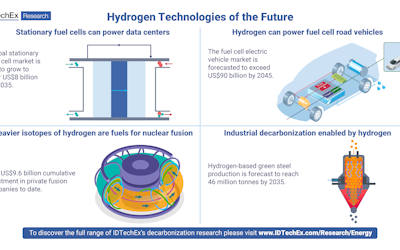
Hydrogen and Helium: Small Molecules, Big Technologies
From the natural gas that underpins power generation to the carbon dioxide emissions driving the climate crisis, there is no denying gases have a significant impact on modern life. This IDTechEx article explores future technologies in power, mobility, and manufacturing enabled by the two lightest gases: hydrogen and helium.
16 Jul 2025
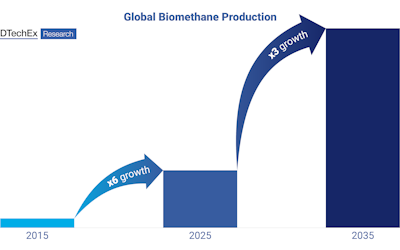
Gas Separation Membranes: Leading Technology for Biogas Upgrading
This IDTechEx article covers biomethane production, which can offer energy security and decarbonized power. It is typically produced via biogas upgrading using gas separation membranes.

24 Jun 2025
Carbon Credits Explained - Biochar, DAC, and BECCS
Carbon dioxide removal has an important role to play in climate strategies for businesses and governments alike. This new IDTechEx article explores three key carbon dioxide removal technologies.

03 Jun 2025
脱炭素化とエネルギー安全保障: ガス分離膜の成長
Key applications, both mature and emerging, for gas separation membranes include biogas upgrading, natural gas processing, carbon capture, and hydrogen separation. As gas separation membrane markets grow, start-ups seek to commercialize new membrane materials and composite structures.

13 May 2025
Solving Cement's Carbon Problem: 422 Megatonnes of CO₂ at Stake
Green cement technologies will avoid a further 422 megatonnes of CO₂ emissions by 2035, according to research from the IDTechEx market report "Decarbonization of Cement 2025-2035: Technologies, Market Forecasts, and Players" - https://www.IDTechEx.com/Cement.
In this short video, Senior Technology Anayst Eve Pope talks through progress in cement decarbonization.
02 May 2025
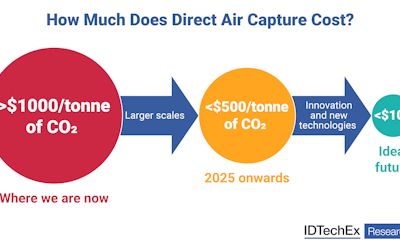
DAC (直接空気回収):CO₂回収コスト 100ドル/トン目標達成への道筋
Direct air capture (DAC) could play an essential role in meeting global net-zero targets by addressing residual and legacy CO₂ emissions. However, capture costs are currently too high. This IDTechEx article explores pathways to lower-cost DAC.

22 Apr 2025
Computers to Cars: IDTechEx Celebrates Sustainable Tech on Earth Day
The environment often pays a price for the comforts of modern life. Every year on Earth Day, the world reflects on pathways towards a greener economy that promotes resource circularity and a lower carbon footprint.

27 Mar 2025
Durable CO₂ Removal Carbon Credit Markets Reach US$14 Billion in 2035
With record-breaking carbon credit sales in 2024 and increasing overlap of voluntary and compliance carbon markets, the business case for carbon dioxide removal is growing stronger. IDTechEx forecasts the carbon credit market revenue from durable, engineered carbon dioxide removal technologies will exceed US$14 billion in 2035.

26 Mar 2025
持続可能性とAI:Data Centre World 2025からの分析
IDTechEx analysts attended Data Centre World in London as part of ongoing data center sustainability and thermal management research. This article highlights three insights from the event.
20 Feb 2025
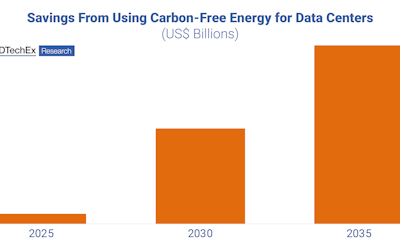
Data Centers Investing in Nuclear, Fuel Cells, and Li-ion Batteries
IDTechEx forecasts that by 2035, the global data center sector will have saved US$150 billion by using low-carbon energy sources compared to a fossil fuel scenario (taking 2024 as the baseline). Some emerging energy technologies expected to play an increasingly important role are explored in this article.
04 Feb 2025
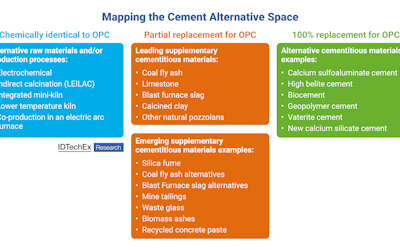
Three Green Cement Technologies for Lowering Scope 3 Emissions
Scope 3 emissions (indirect greenhouse gas emissions that occur in a company's value chain but are not produced by the company itself) are hard to quantify and even harder for businesses to reduce. The embodied carbon from construction can often be a significant contributor, with most of this CO2 coming from the cement used. This article explores three new green cement solutions that are increasingly enabling companies to decrease scope 3 CO2 emissions.
27 Jan 2025
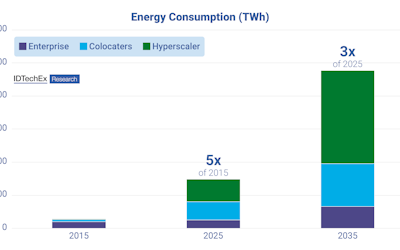
Data Center Energy Use to Exceed 2000 TWh in 2035
By 2035, IDTechEx forecasts that the continued growth of artificial intelligence will result in over 2000 TWh of energy being consumed by data centers. The expected increase in CO2 emissions from powering these new data centers creates a dual challenge for both governments with net-zero targets and tech giants with internal carbon neutrality pledges alike: how can the unprecedented rise of AI be supported without causing major harm to the environment?

07 Jan 2025
Demand For Low-Carbon Cement Is On The Rise
Global demand for low-carbon cement is increasing. Government regulation for low-carbon cement production is strongest in the European Union, and the US government has been particularly active in green public procurement. Private sector demand is growing, and the advent of book and claim systems could accelerate this market even further.

03 Dec 2024
Green Cement Technologies: 422 Megatonnes Extra CO2 Avoided by 2035
As global populations rise and more regions urbanize, cutting back on construction isn't a viable decarbonization strategy. Leading cement decarbonization technologies, including supplementary cementitious materials, alternative fuels, and carbon capture, will avoid an additional 422 million tonnes of CO2 emissions, in the cement sector over the coming decade.

22 Nov 2024
CCUSの市場動向:二酸化炭素回収は今後10年でどう変わるのか?
Across the globe, over 140 countries have set a net-zero target, with many committed to reaching net-zero CO2 emissions by 2050. This Herculean task will require many emission reduction technologies in tandem - and the groundwork must be laid now. CCUS (carbon capture, utilization, and storage) solutions have been identified as one such vital tool with the ability to decarbonize existing industry assets.
24 Oct 2024
The Role of Voluntary Carbon Credit Markets in Supporting CCUS
While most of the voluntary market saw a downturn in 2023, corners of the market selling durable, carbon removal credits are flourishing and playing a vital role in supporting emerging technologies such as direct air capture and CO2 utilization in concrete.
24 Sep 2024
CO2 Utilization: Emerging Synthesis Pathways for Chemicals and E-fuels
The chemicals industry depends heavily on finite fossil fuel feedstocks and is responsible for 2% of global anthropogenic CO2 emissions. IDTechEx explores how captured CO2 could be utilized as a feedstock for hundreds of different chemicals instead, providing an economic and environmental incentive to capture carbon dioxide and create a circular economy.

12 Sep 2024
Dedicated Geological Storage of CO2 Set to Dominate CCUS
According to IDTechEx forecasts, dedicated geological storage of carbon dioxide will outpace EOR as the leading end fate of capture CO2 by the end of the decade. By 2045, IDTechEx forecasts the world will be sequestering 1.6 gigatonnes per annum of CO2 underground.
27 Aug 2024
CO2 Utilization Market to Grow To US$240 Billion by 2045
Carbon capture technologies capable of removing CO2 from industrial emissions have been around for over 50 years, but widescale deployment of CCUS (carbon capture, utilization, and storage) has been too slow for global net-zero ambitions. While governments are beginning to implement carbon pricing mechanisms or tax credits to motivate permanent storage of CO2 deep underground, a profitable business model exists beyond CO2 sequestration via emerging CO2 utilization applications.

05 Aug 2024
Early Opportunities: Which Industries Will Embrace CCUS First?
Carbon capture, utilization, and storage (CCUS) technologies strip carbon dioxide (CO2) from waste gases and directly from the atmosphere before either storing it underground or using it for a range of industrial applications. IDTechEx forecasts significant growth for CCUS.

30 Jul 2024
Key CCUS insights from Carbon Capture Technology Expo North America
Major CCUS (carbon capture, utilization, and storage) players converged in Houston, Texas, in the last week of June for the 2024 iteration of the Carbon Capture Technology Expo North America. Co-located with the Hydrogen Technology Expo, the event boasted over 8000 attendees and 400 exhibitors - including IDTechEx.
10 Jul 2024
CCUSの回収能力は2045年までに年間2.5ギガトンに到達
Carbon capture, utilization, and storage (CCUS) technologies strip carbon dioxide (CO₂) from waste gases and directly from the atmosphere before either storing it underground or using it for a range of industrial applications.

17 Jun 2024
Three Ways the Ocean Can Become a Carbon Removal Titan
Every year, our oceans absorb 11-15 gigatonnes of CO2 as part of the Earth's natural carbon cycle. An unsung hero in the face of rising global temperatures, negative emission technology pioneers have begun asking a simple question: What if the power of this immense marine carbon sink could be harnessed even further?
13 May 2024
Durable, Engineered CO2 Removals to Reach 630 Mt by 2044
Carbon dioxide removal (CDR) will be needed to reach any international net zero emission targets and avoid global warming beyond 1.5-2°C. Negative emissions technologies (NETs), especially those that go beyond nature-based approaches to provide long-lasting scalable CO2 removals, have therefore been receiving increased support through government policy and voluntary carbon credit purchases from corporations with ambitious climate goals.

11 Apr 2024
Can Greener CO2-derived Chemicals Accelerate CCUS Uptake?
The chemical sector alone is responsible for 2% of global anthropogenic CO2 emissions, and the industry depends heavily on finite fossil fuel feedstocks. The new IDTechEx report, "Carbon Dioxide Utilization 2024-2044: Technologies, Market Forecasts, and Players", explores how captured CO2 could be utilized as a feedstock for hundreds of different chemicals instead.
21 Feb 2024
Building a Net-Negative Future: CO2-Derived Concrete
In a world with a growing population and a rapidly expanding construction sector to match, how do we prevent building homes from damaging our climate? Concrete is the second most consumed material on Earth, but its key ingredient, cement, is responsible for 7% of global anthropogenic CO2 emissions. The answer could come from thin air - CO2-derived building materials.


